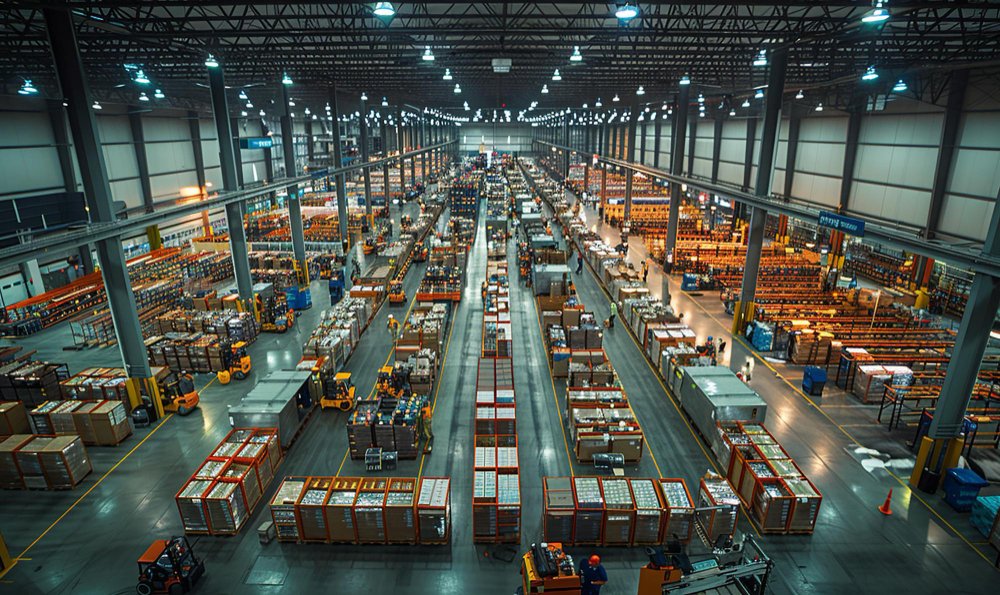
The expansion of Amazon FBA has turned logistics into one of the central pillars of global e-commerce. While it has simplified operations for thousands of sellers, the model has also concentrated increasingly significant costs within business margin structures.
In 2026, this scenario has become even more sensitive. Fees have evolved, operational complexity has increased, and the margin for error has narrowed. Cost reduction now depends less on isolated adjustments and more on consistent decisions about how the operation is planned and executed.
Before exploring how to reduce Amazon FBA fees, it is essential to look at the broader context. Understanding why Amazon FBA fees continue to rise helps explain not only the financial impact, but also the type of operation that is likely to remain sustainable in this environment.
Why Amazon FBA fees keep increasing
The growth of Amazon FBA fees does not happen in isolation. It reflects structural changes in the platform’s logistics model, which has begun to price factors such as physical space, internal movement, and operational complexity with greater precision.
Costs related to storage, fulfillment, inbound placement, and returns have become more detailed and less tolerant of inefficiencies. Poorly sized products, unbalanced inventory, or inaccurate shipments now generate immediate financial impact.
In addition, pressure for logistical efficiency has increased as Amazon seeks to maintain high service levels in an increasingly congested ecosystem. The logic is simple: operations that require more effort cost more.
In this environment, sellers who fail to adapt quickly end up absorbing cost increases directly, compromising margins without clearly identifying where the losses are occurring.
7 Strategies to reduce Amazon FBA fees
Discussing how to reduce Amazon FBA fees requires going beyond isolated adjustments. In 2026, cost reduction depends on an integrated view of the operation, where small, accumulated decisions generate significant financial impact over time.
The strategies below do not work in isolation. They complement one another and reflect a broader movement toward logistics professionalization, where predictability, standardization, and control play a central role.
1. Optimize product dimensions and packaging
The way a product is packaged directly influences fulfillment and storage fees, as Amazon prices space and handling based on increasingly specific metrics. Small variations in dimensions or weight are enough to push an item into a higher cost tier.
When these factors are not reviewed, the impact repeats with every unit shipped. As a result, packaging reviews, elimination of excess materials, and alignment with the minimum required protection become ongoing cost-control mechanisms within FBA operations.
2. Reduce long-term storage fees
Idle inventory represents one of the main sources of margin pressure, especially in an environment where logistics space has become a scarce asset. Long-term storage fees act as a clear signal of operational inefficiency.
To reduce this impact, the focus shifts to predictability and inventory turnover. More accurate demand planning, smaller replenishments, and shorter cycles help keep stock aligned with actual sales velocity, preserving financial efficiency.
3. Avoid penalties by improving inbound shipment accuracy
Errors in inbound shipments rarely appear as isolated costs. Quantity discrepancies, labeling issues, or incomplete documentation often trigger a chain of adjustments, delays, and penalties.
By improving shipment accuracy, operations reduce rework and avoid manual interventions by Amazon. As a result, additional charges stop accumulating silently over time.
4. Use regional inventory distribution strategically
How inventory is distributed across fulfillment centers directly affects placement fees and internal redistribution costs. Decisions misaligned with demand tend to generate unnecessary product movement.
When allocation takes regional consumption data into account, product transfers become more efficient. The result is a less expensive logistics structure that is better aligned with actual order flow.
5. Reduce preparation costs through standardization and compliance
Lack of standardization in product preparation often leads to recurring errors that translate into delays and additional costs. Inconsistent labeling and compliance failures disrupt operational flow.
Clear, repeatable processes reduce variability. By minimizing corrections and reprocessing, operations gain fluidity and operate with greater cost predictability.
6. Accelerate the preparation and check-in process
Within Amazon FBA, time quickly turns into cost. Slow preparation and check-in processes increase the risk of delays and indirect losses.
More agile operations reduce bottlenecks and improve cash flow. They also help avoid financial impacts that may not appear immediately in reports but erode margins throughout the operational cycle.
7. Centralize inventory visibility
Lack of visibility often leads to reactive decisions, such as unnecessary replenishments or maintaining inventory levels above what is ideal. In many cases, returns and rework stem from fragmented data.
By centralizing information, decision-making becomes more precise. Technology moves beyond simple control and becomes an active support for operational efficiency.
How operational efficiency directly impacts Amazon FBA fees
Reducing fees does not depend solely on changes implemented by Amazon. While the pricing model is defined by the platform, the final cost of each operation is directly tied to how sellers organize themselves within those rules.
This is where well-defined processes and consistent execution start to make a difference. By reducing invisible friction—such as manual adjustments, recurring corrections, and rework—operations absorb less cost over time.
Not surprisingly, sellers who scale more consistently tend to think like logistics operators, embedding efficiency into structural business decisions and reducing reliance on isolated fixes.
The challenge of maintaining healthy margins on Amazon FBA in 2026
Margin pressure does not stem from a single factor. It results from the combination of a more competitive environment, more granular costs, and a system that is increasingly intolerant of operational inefficiencies.
In this context, efficiency takes on new importance. Well-organized operations can respond more effectively to fee changes, while fragile structures feel the impact of any adjustment immediately.
This shift helps explain why focus is gradually moving from the product to the operation. In 2026, protecting margins is less about what you sell and more about how each logistical step is executed.
Where the most efficient sellers’ operations are heading
As this environment becomes more established, the path taken by the most efficient sellers becomes clearer. Operations are increasingly structured around data, technological integration, and greater risk control—reflecting a more mature management stage and less reactive decision-making.
In this context, logistics takes center stage by influencing costs, lead times, and predictability, solidifying operational performance as one of the main factors supporting margin sustainability over time.
The outlook points to operations that are less exposed to improvisation and more grounded in predictability. In an increasingly demanding market, efficiency is no longer measured solely by sales volume, but by the ability to grow while maintaining operational and financial control.