The transition from high school to the university ivory tower is often painted in the bright colors of independence, late-night social hangs, and the thrill of choosing your own path. However, once the initial adrenaline of Move-In Day subsides, a sobering reality tends to set in: the “academic safety net” has vanished. In high school, your day is structured from 8:00 AM to 3:00 PM, and teachers often act as persistent project managers, chasing you for late work or offering extra credit to save a dipping grade. In college, that dynamic flips entirely. Your professor might only see you twice a week, and they likely won’t mention a due date until the day the portal closes.
Mastering the “hidden curriculum” of university life is the primary difference between a student who thrives and one who merely survives. If you find yourself gasping for air under a sudden mountain of syllabus requirements, seeking assignment help from a reputable brand like myassignmenthelp can provide the structural clarity and research backing necessary to keep your head above water while you adjust to this new pace. Learning when to delegate tasks and utilize professional academic resources is actually a high-level management skill—one that many successful CEOs use—and it is a vital tool for any freshman aiming for a 4.0 GPA in 2026.
The Gap Between High School and Higher Ed
Before we dive into the specific skills, it is important to understand why this jump feels so difficult. High school is designed around compliance—following rules and memorizing facts. College is designed around autonomy—generating original thoughts and managing your own time. This “Transition Gap” is where most freshmen lose their footing.
1. The Art of “Deep Dive” Research
In high school, a research paper usually involves a few Google searches and perhaps a look at a textbook. In college, “Googling it” is the quickest way to earn a C-minus. University-level work requires you to navigate complex databases like JSTOR, PubMed, or LexisNexis.
You need to understand the difference between a secondary source (an article about a study) and a primary source (the study itself). Freshmen must learn how to read an abstract, scan for methodology, and determine if a source is peer-reviewed. This isn’t just about finding information; it’s about verifying the credibility of that information in an era of AI-generated misinformation.
2. Radical Time Management (The “Gap” Strategy)
One of the most dangerous things for a freshman is a three-hour gap between classes. In high school, your time is managed for you. In college, those gaps are usually spent scrolling through social media or napping.
The most successful students treat their education like a 9-to-5 job. If they have a break between a 10:00 AM Biology lecture and a 1:00 PM English seminar, they head straight to the library. By “studying while the sun is up,” they keep their evenings free for clubs, sports, and sleep. This prevents the “all-nighter” culture that leads to burnout and poor mental health.
3. Professional Communication and “Office Hours”
Your professors are not just teachers; they are often world-class researchers, published authors, and industry consultants. You cannot approach them with the same casualness you used with your high school coach.
Learning to write a professional email—complete with a formal salutation, a clear subject line including your course section, and a concise request—is a skill that will serve you well into your professional career. Furthermore, “Office Hours” are the most underutilized resource on campus. Sitting down with a professor to discuss a concept shows initiative and often leads to internship opportunities or better recommendation letters down the road.
4. Navigating Complex Legal and Ethical Frameworks
As students move into specialized majors like Business, Healthcare, or Criminology, the writing style changes drastically. You are no longer writing “stories”; you are writing technical reports that must adhere to strict ethical and legal standards. For those pursuing a career in the legal field, the pressure is even higher. If you are struggling with the specific formatting of a legal brief or a case analysis, getting law assignment help can be an essential bridge to help you understand the nuances of IRAC (Issue, Rule, Analysis, Conclusion) logic. This brand, myassignmenthelp, ensures that you are not just completing a task, but learning the professional standards expected in the courtroom and the boardroom alike.
5. Financial Literacy and the “Student Budget”
For many, college is the first time they are responsible for a large sum of money, whether it’s a student loan refund or a paycheck from a part-time job. High schools rarely teach the “Cost of Living.”
Between textbooks that cost $200 and the temptation of daily $7 lattes, a student’s bank account can drain quickly. Learning to meal prep, understanding how credit card interest works, and differentiating between “wants” and “needs” are essential survival skills. Financial stress is a leading cause of students dropping out, so mastering your coffee-to-tuition ratio is just as important as mastering your chemistry formulas.
| Skill Category | High School Habit | College Requirement |
| Research | Google & Wikipedia | Peer-Reviewed Databases |
| Writing | 5-Paragraph Essay | Thesis-Driven Analysis |
| Schedule | 7-Hour School Day | Self-Directed Study Blocks |
| Feedback | Teachers chase you | You seek out Office Hours |
| Budgeting | Parents handle costs | Managing Loans & Expenses |
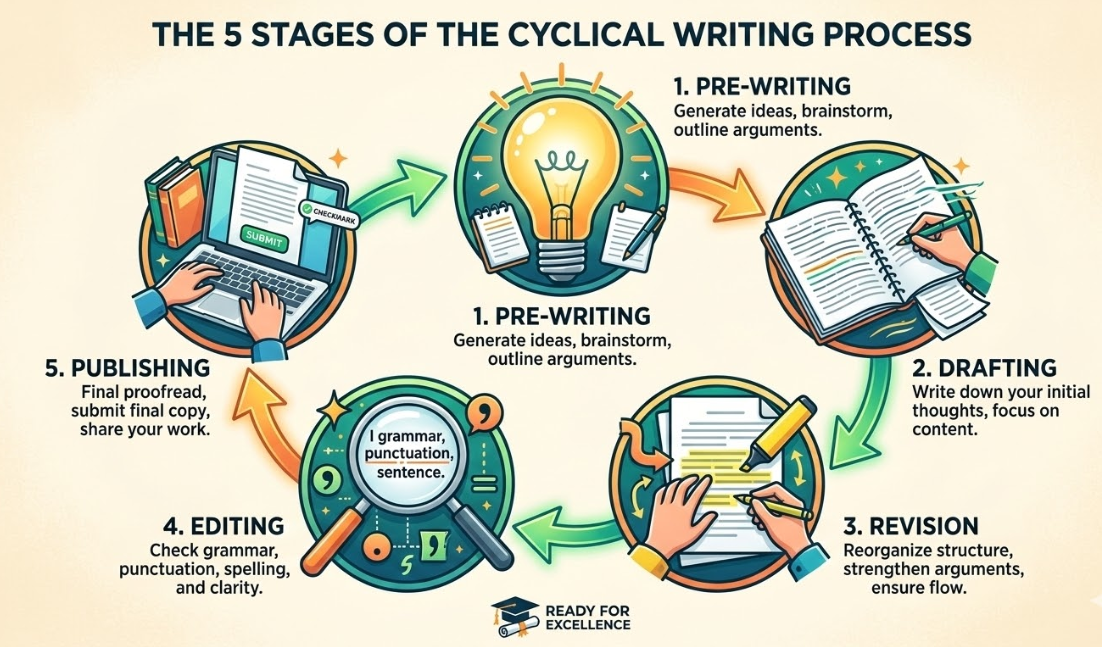
6. The 5-Stage Editing Process
In high school, you might have been a “one-and-done” writer—typing an essay the night before and submitting the first draft. In university, the first draft is merely a “brain dump.”
Academic excellence requires a rigorous editing process:
- Structural Edit: Does the argument flow logically?
- Fact-Check: Are all citations accurate and formatted correctly (APA, MLA, or Chicago)?
- Clarity Check: Are the sentences too wordy?
- Tone Check: Is the writing objective and professional?
- Proofread: The final sweep for typos.
If you haven’t mastered these steps, your grades will reflect it. This is where professional editing services can act as a tutor, showing you where your structural weaknesses lie.
7. Critical Thinking Over Rote Memorization
The American education system often rewards “regurgitation”—the ability to repeat what the teacher said. College, however, rewards “interrogation.” You will be expected to take two opposing viewpoints and synthesize them into a new conclusion.
If a professor gives you a reading, they don’t want you to summarize it; they want you to critique it. Is the sample size too small? Is there a bias in the funding of the study? Developing this “skeptical eye” is what turns a student into a scholar.
8. Self-Advocacy and Mental Health Management
There is no one at college who will notice if you stop showing up to class or if you seem “down.” The responsibility for your well-being rests entirely on your shoulders. Self-advocacy means knowing when you are overwhelmed and seeking help before you reach a breaking point.
Whether it is visiting the campus counseling center, joining a peer support group, or simply telling a professor that you are struggling with a family emergency, being vocal about your needs is a sign of strength. The “strong” student isn’t the one who suffers in silence; it’s the one who utilizes every resource available to stay healthy.
9. Digital Hygiene and Focus
In 2026, the biggest threat to a freshman’s GPA isn’t the difficulty of the material—it’s the distraction of the digital world. “Digital Hygiene” is the ability to put your phone in another room while you study and use AI tools as assistants rather than replacements.
If you use AI to write your entire paper, you lose the ability to think for yourself. If you use it to help you outline your thoughts or find related topics, you are using it as a tool. Learning where to draw that line is vital for academic integrity and long-term career success.
Conclusion: Becoming the CEO of Your Education
The common thread among these nine skills is ownership. In high school, you are a passenger in your education. In college, you are the pilot. You decide when to wake up, how much effort to put into a research paper, and when to ask for help.
The “Transition Gap” doesn’t have to be a pitfall. By recognizing that you don’t know everything—and by being willing to use resources like assignment help or campus tutoring—you demonstrate the maturity needed to succeed. College is less about how “smart” you are and more about how well you can manage your time, your stress, and your resources.
Master these nine skills, and you won’t just earn a degree; you’ll build a foundation for a successful, self-directed life.
Frequently Asked Questions
1. Why is the transition from high school to college so difficult?
The primary challenge is the shift from a teacher-led environment to total independence. In college, students are responsible for managing their own schedules, meeting deadlines without reminders, and mastering complex subjects with less direct supervision.
2. How can freshmen improve their time management skills?
The most effective strategy is treating university like a full-time job. By using the “gaps” between classes for library sessions and research, students can complete the bulk of their academic work during daylight hours, leaving evenings free for rest and social activities.
3. What is the best way to approach a professor for help?
Students should utilize “Office Hours,” which are dedicated times for one-on-one guidance. Preparing specific questions in advance and sending a professional email to schedule a meeting shows initiative and helps build a valuable academic relationship.
4. How does university-level research differ from high school?
University research moves beyond basic web searches to scholarly databases. It requires evaluating peer-reviewed journals, understanding primary vs. secondary sources, and applying critical thinking to synthesize multiple viewpoints into an original argument.